07.27
“I didn’t take Lazarus for an anime adaptation of Driving Miss Daisy.” – Mumi on The Weeb Crew
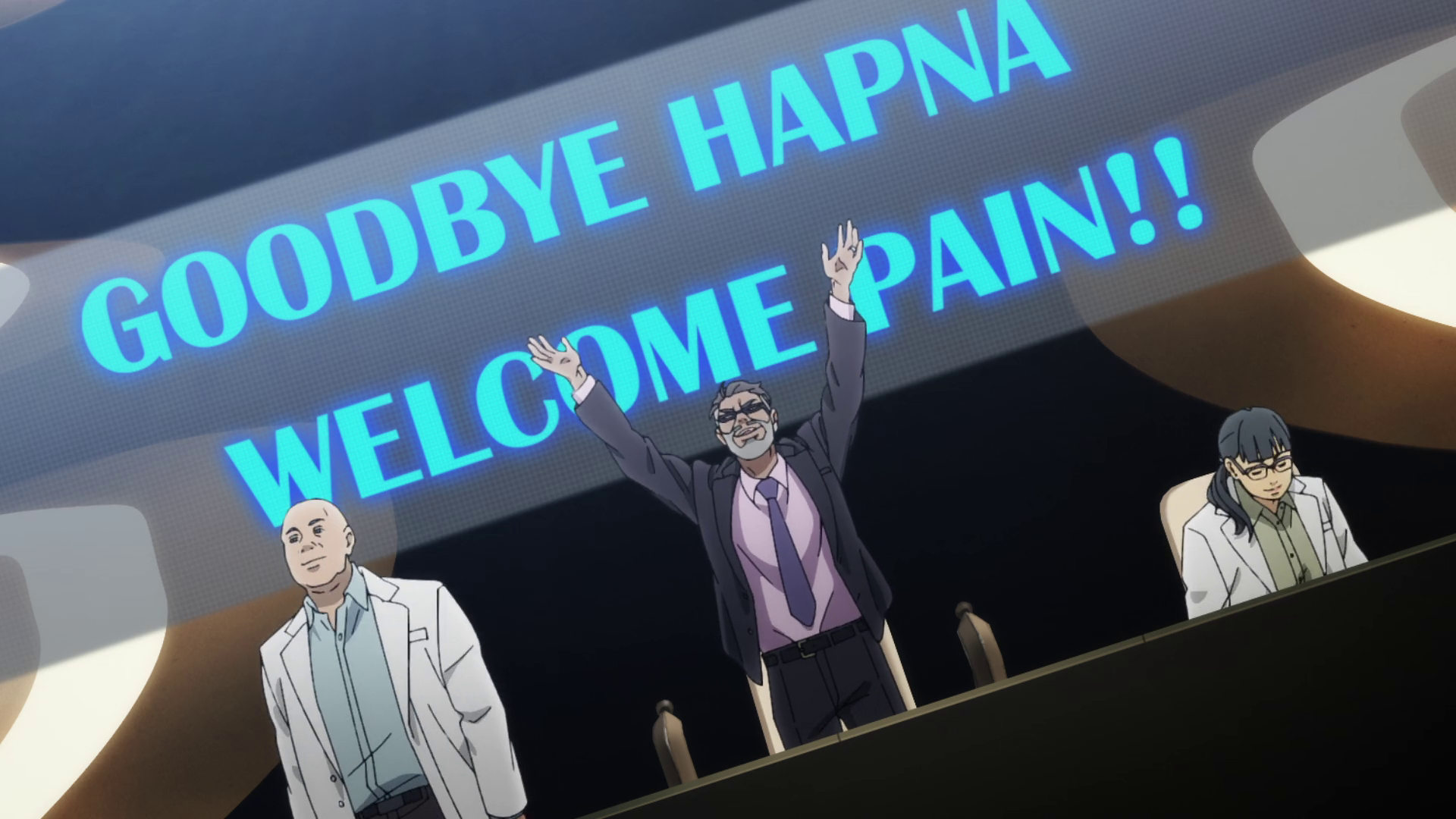
So yeah, the new show by acclaimed director Shinichiro Watanabe, about a select team of individuals sent to save the world from a mad scientist’s plot to kill most of humanity using pain-relief medication, wrapped up a few weeks ago. Short review: It sucked. Long review…
Okay, good things about Lazarus first: It gave artists I like and respect paid work. I’m sure many people in the production are decent folks who benefited from having a show to work on over the past year. I fully understand how erratic the anime industry can be for animators when it comes to pay or finding steady employment, so on a financial level, I prefer this show exist than not. That said, I don’t know how much Lazarus’ production paid its animators. So even this is well-wishing on my part.
I’ve made it clear multiple times on the forum how I don’t fully understand Toonami’s continued existence anymore, I haven’t had a high opinion on Toonami originals over the past few years, and I’ve been thoroughly disillusioned with DeMarco as a producer. And the only reason I really kept going with Lazarus in the first place was because it had Watanabe’s name on the director credits. I admit this is all a bit hypocritical on my part since I usually look down on people who insist they’re done with something they used to love but then won’t shut up about how they’re done, but at least I’m self-aware enough to acknowledge I’ll never really be done with Toonami one way or another no matter how much I talk shit about it. There’s still some nostalgia left, regretfully so, and to pretend otherwise is just me lying.
Which does make Lazarus annoying, because it is an appeal to nostalgia. From beginning to end, it’s a show where the main hook is reminding you of the time you watched Cowboy Bebop nearly 25 years ago. I’m aware Watanabe insisted it wasn’t meant to evoke Bebop, but the opening, the character archetypes, and the imagery all beg to differ. It’s perhaps a surprise and a relief that the finale wasn’t just a remake of The Real Folk Blues (although the death of the assassin Soryu clearly evokes Vincent’s death in Knockin’ On Heaven’s Door), but everything else? A lead blatantly meant to echo Spike but without the ethos or voice acting that made Spike charm audiences for years? The brains, fanservice, and tech support just like Jet, Faye, and Ed? A villain who’s just parts of Vincent, Vicious, and Tongpu hastily taped together because the show needed a physical threat and they might as well rip themselves off there too, while offering a backstory that ultimately amounts to nothing in the end (the third-to-last episode implied a secret connection between Soryu and Axel, only to do nothing with it and imply the masterclass assassin just has a mental breakdown at the sight of seeing feathers)? Admittedly, Samurai Champloo also received criticism for being too much like Bebop, but I could roll with that. Because at least the arc to find the sunflower samurai didn’t weight down the individual stories as much as Lazarus’ ticking doomsday clock plot did.
It increasingly became laughable how the show made a huge point out of how time was running out to find the cure, but even as they reached the finale, the average civilian didn’t seem to stress that they were going to die in 24 hours. And by the end, spoilers, they were completely right because the cure was mass-produced and instantly shared to the entire world with very little collateral damage beyond a seemingly empty building Soryu blew up. An apocalyptic storyline is given almost zero emotional weight or pathos, with people I talked to before the finale trying to reason that the apathy throughout the show was meant to be the theme, that the world ends when good people don’t care enough to save it and how banality is the root of all evil.
But then that wasn’t the case, and you’re left without any ponderings on eschatology, with the potential collapse of civilization being little more than a backdrop for some action set pieces. And if many of the characters don’t pay much mind to doomsday, then why should we? It’s hard not to think of shows like Texhnolyze which dealt with combining the end of humanity with the malaise of it all, and how that series crafted a much more precise atmosphere than what Lazarus achieved. Or even how another anime that came out last season, Apocalypse Hotel, understood how to mine emotion from humanity’s end albeit in the opposite direction. And outside of anime, I’ve been recently watching the cult classic Fox show Millennium starring Lance Henriksen that explores what it means for humanity to reach the end of days throughout its 3 seasons. But here, what’s the point? Wait, worry, who cares? And for 13 episodes, I was given a world that didn’t care if it died, with main characters so incompetent that they could have resolved the entire plot by episode 3 if they looked a little harder. Instead of being a study on suicidal indifference or if humanity really deserves to live or not (the show’s occasional insistence on it being the latter is heavily drowned out by the obvious “People probably don’t deserve to die because they took painkillers once” issue), it becomes obvious: This is just a dumb but forgettable 90-minute action movie unnaturally stretched into a TV show that lasts a painful 5 hours.
I’m reminded of the executive producer Jason DeMarco’s repeated insistence that no movie is long enough on his now defunct Twitter account (the fact he announced his departure shortly after his Uzumaki adaptation was shredded by critics totally carries no correlation). Because I’ve had a complicated relationship with DeMarco’s work for a while. Loved what he did with Toonami in the 00s, was one of the many who applauded the surprise return of the block in 2012, and even asked him questions back when he was in his interactive ask.fm phase. But over time, the nostalgia goggles for his efforts broke apart. A combination of bizarre, often annoying takes on social media, a haughty attempt to seem avant-garde despite making adaptations and sequels of IPs while ultimately producing a show like this that borrows from works as “obscure” as Suicide Squad and Captain America: Winter Soldier, dissatisfaction with Toonami and Adult Swim as a whole, and a general hypocrisy there tore open the curtains. Petty and parasocial on my part? Sure, but still, it became no surprise when the man who was previously beloved for bringing anime to kids during the turn of the millennium would shift into being lambasted as the content creator who produced a series of maligned FLCL sequels, the latest in a series of poor Junji Ito adaptations, and now, a 4/10 show from the creators of Cowboy Bebop and John Wick. Almost a sick punchline that his next show on Toonami will feature a CGI cock.
And that brings me to asking why Toonami still exists in 2025. Because it was clear in 2000: To show grade schoolers anime they normally wouldn’t find on Kids WB or Fox Kids. And to a lesser extent, Adult Swim Action in the mid-2000s had a similar purpose but for late night, for the teenage and young adult audience. But now, we’re in a worst of both worlds scenario where they fused Toonami and ASA together into one late-night block, in an age where anybody can just watch anime through streams (whether those streams are legal or illegal, I can’t judge). The new Dragon Ball Daima aired on Netflix, in multiple languages, months before it stepped foot on Toonami, for instance. And the idea that someone would prefer watching a show once a week at 12, 1, or even 2 AM as opposed to binging it whenever has long since become absurd, with Toonami’s ratings slipping into the pitiful 5 digit figures. And as I mentioned before, there’s still that sentimental attachment on my part in regards to Toonami. But as it stands, would it really matter if it ended now? Because I don’t want to make say no new viewers are getting into anime via Toonami these days, since there were shows I got into as a kid just because they aired late at night on the old International Channel decades ago like Slayers or DBZ, so there’s inevitably at least one kid out there whose first anime is a random One Piece episode at 1:30 AM, but on an actual collective level? Though I suppose it would deprive the Toonami ratings anoraks of their precious numbers to pathologically obsess over if the block were to end (for anyone asking for context, google “Toonzone Toonami ratings”, find endless discussion on otherwise meaningless data, and see an inevitable future where online denizens praise a show for getting 5 viewers in the Nielsen ratings instead of 4).
Maybe it’s no mistake a programming block with no clear ambition became the home for a show with only pretenses of themes instead of an actual idea worth exploring. Or maybe the messenger of death in Lazarus becoming a confused blind man became an ironic sign for what path its crew will follow. What does this all mean? Why are we all here? When will DeMarco panic and push the “Greenlight Outlaw Star Season 2!” button? Because through it all, past the enigma and ennui brought forth from behind the scenes rather than the story itself, Lazarus is just the anime equivalent of those DTV geezer teaser movies that star Bruce Willis or Jean-Claude Van Damme for like 5 minutes and trick confused viewers into thinking they’re gonna get a film as good as Die Hard.