06.15
It’s a tale as old as time, where two Australian brothers make some crudely-animated Mario shorts and find enough success to form their very own animation studio. Then a little voice pops up in their head whispering “You should make cartoons that remind people of Reboot. Remember Reboot? Remember Hexadecimal? ‘Member?” and they do so, making so many CGI shows about video game worlds that make viewers like you go “Yeah, I remember Inklings. I remember Gaia Online culture. I remember Nintendo 64. I remember… sigh, RWBY.” But then a freak accident happens, and they end up acquiring a cartoon about existential nightmare circus attractions that bag hundred million views per video, and what was one indie studio soon becomes the face of indie animation whether they want it or not. And so, they grow, partner up with former Disney animators and current grumps, and become that frustrating middle line between “indie” and “mainstream”. A line somehow difficult to define but rather easy to provoke rage across the gamut of cartoon fans.
American cartoon shows are in a very hazy place right now. Nobody’s watching Nickelodeon, Disney Channel, or Cartoon Network outside of sparse holdouts, while the animated series that do find life on streaming wind up with a fraction of the fame or infamy the monoculture provided even the most mediocre shows of the 2000s. Television’s in a very rocky place right now, in ways that annoy almost everyone from executives to artists to audiences alike. 22-episode seasons are gone outside of cop/hospital shows your grandparents watch on CBS. That water cooler show all your friends are talking about won’t get a second season until three years from now. While in western animation, the once prominent field of TV-Y7 shows aimed at the elementary to middle school crowd are mostly dead, replaced with a dichotomy of 2D shows either aimed at babies or adults with nothing in-between. For the adolescent too old for Bluey but too young for South Park, what’s left? Kids WB is long dead. Nickelodeon just airs reruns of Spongebob and PAW Patrol. Toonami’s a near-corpse tied to several feeding tubes, coughing up blood at 2 AM. Sure, there’s probably some kid watching My Adventures With Superman, and that Arcane show was pretty popular, but for the kids who’ve abandoned cable and can’t afford streaming, where can American cartoons appeal to them aside from the chaotic yet accessible land of indie shows on YouTube?
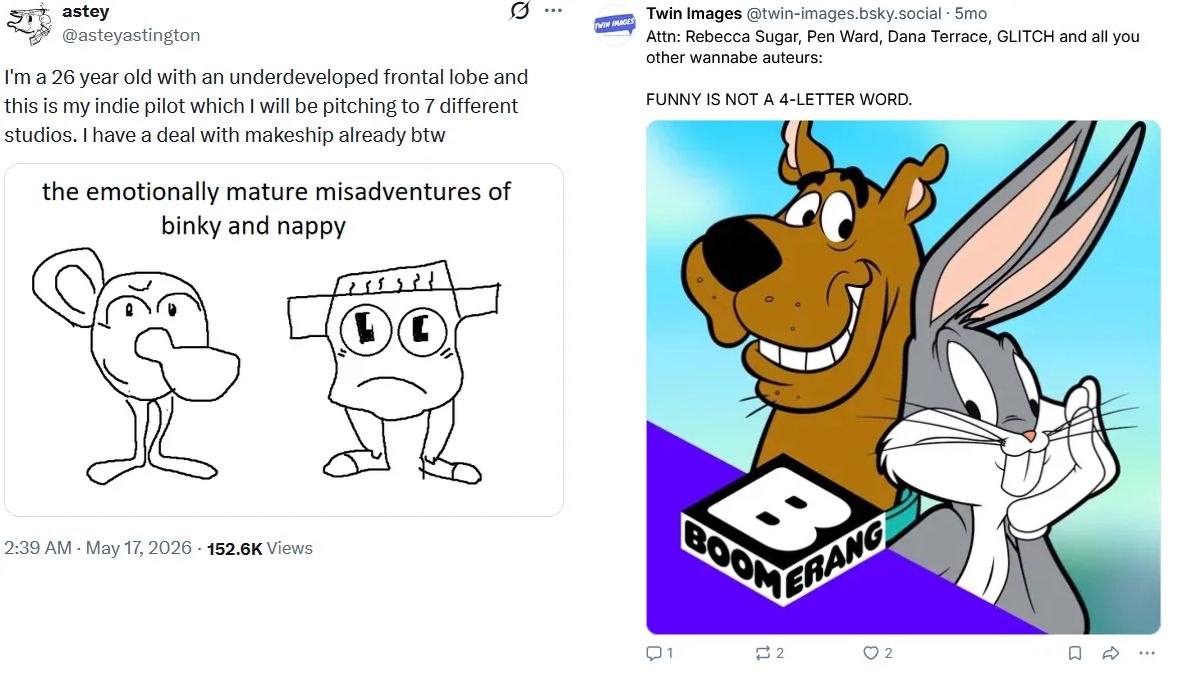
Don’t get me wrong, this isn’t an article meant to jack off Glitch Productions or treat them like the Moses of modern animation studios guiding them to a new age. It’s far more complicated than that. The Amazing Digital Circus and Gameoverse, I quite enjoy and I hope Glitch gives a series order to the latter sooner than later. But the rest of their output? Murder Drones and especially Meta Runner were chores to watch. Gaslight District and Knights of Guinevere are fine but not fully my cup of tea. And SMG4, something I probably would’ve enjoyed watching in high school but can’t find any appeal now. The overall output averages out to fine to me, but that’s not what got me curious about Glitch. It’s how everyone’s reacting to them. The two tweets above were one of many polarized responses to Glitch that I found, which amused yet perplexed me at the same time.
When a work of media gets popular enough, it’s bound to become a Rorschach test where two groups of people will get the exact opposite meaning from said art, leading to often bizarre discourse that the original artist clearly didn’t intend. And I’m all for post-structuralism and finding meaning in art beyond what the artist meant, but seeing detractors criticize a studio for contradictory reasons, I’m left wondering how. In the same way you can find fringe readings on mainstream animation like The Lion King where one critic will say it’s far-left and another critic say it’s far-right, when the movie’s real intent is to get asses in theater seats and make Disney as much money as possible. But with Glitch, the demographic confusion was what I find fascinating. Some people think it’s for easily-amused children. While other people think it’s run by joyless auteurs. With no real nuance because this is social media and social media demands ragebait over everything else. Might as well go “Either you like Cocomelon or you like Most Disturbed Person on Planet Earth” and it makes as much sense as the average hot take on Twitter/Bluesky/Instagram/Friendster/Threads/Mastodon/Pterodactyl/Triceratops/Saber-Toothed Tiger/etc. Everyone’s mad and confused more than ever, but instead of learning how to deal with those issues and grow the fuck up, we need the dopamine rush of getting a like on our tweets. Even if those likes are obviously from bots instead of actual humans who view you as a fellow person. And when it comes to cartoon fandom, that mentality quadruples because adult cartoon fans are an unhinged bunch. I should know since I’m one of them.
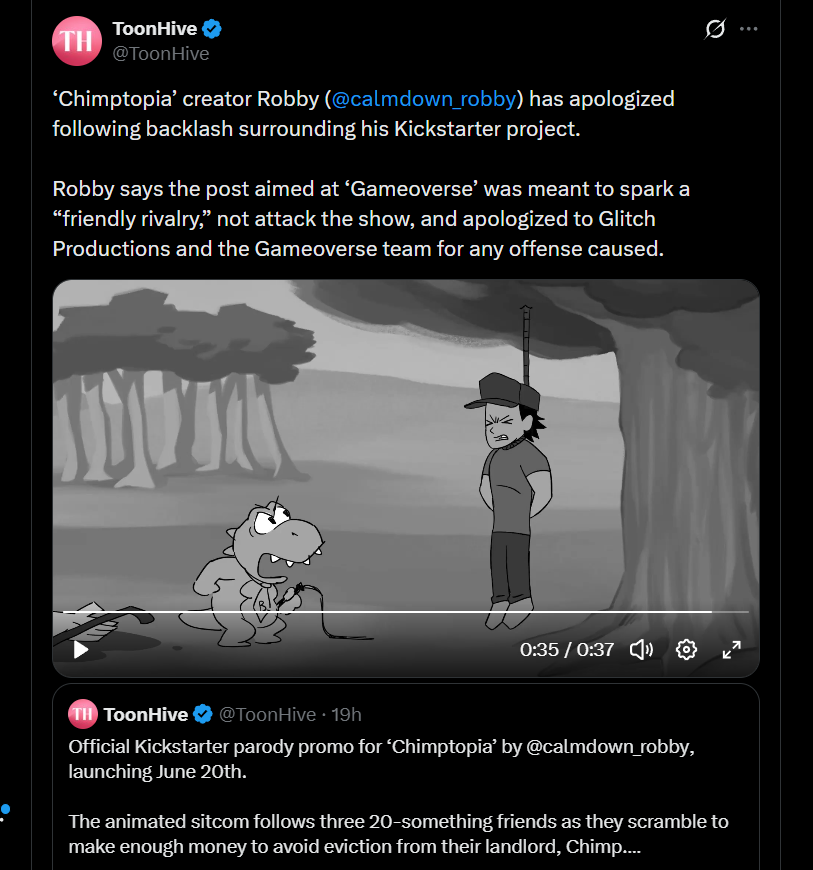
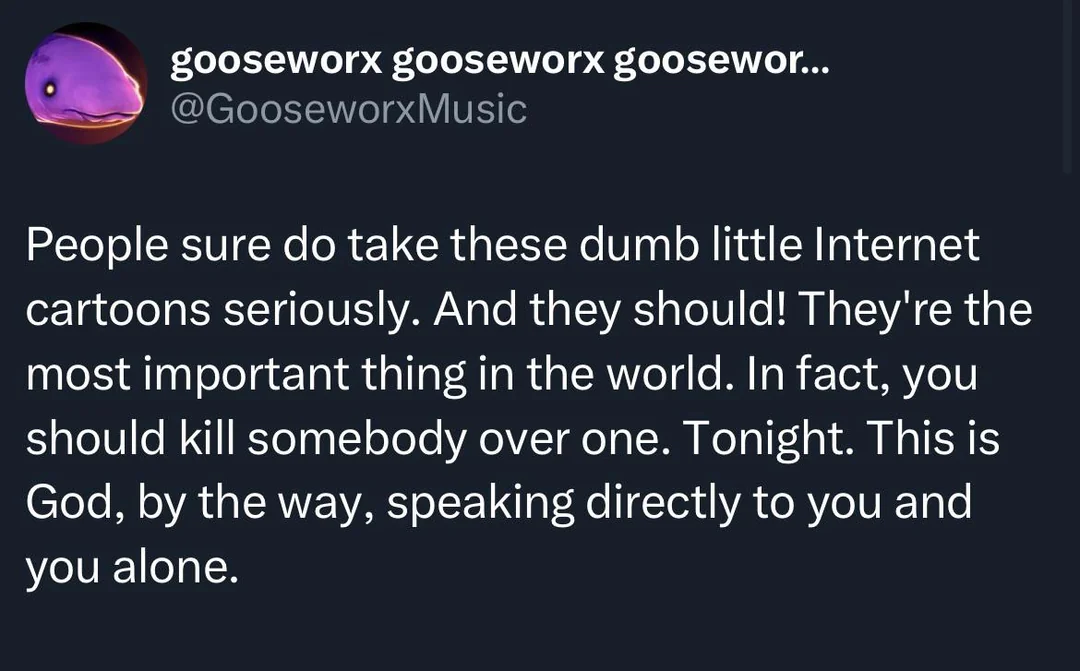
And when a studio hits it big not just online but in the box office, that already large insanity from the viewers swells, as seen from how TADC fans recently treated Gooseworx and the show’s cast. The safety line between pop culture and fandom disappears and it all just becomes psychic violence incomprehensible to those watching the outcome from a distance. But it’s not as if that’s unique or new, no. That’s been a thing ever since Sherlock Holmes fans cried at Arthur Conan Doyle enough for him to revive his famous character from certain death. But just because you’ve seen a million fires doesn’t make the latest any less impactful. Fame and the consequences from fame are always intriguing and depressing. At the time of this writing, I discovered some indie animators pitching their own show by depicting their self-inserts beating the shit out of what’s clearly meant to be Gobbles from Gameoverse. And yeah, the blowback was immediate and ruthless, most saw it as a lame attempt to stir up publicity, but a show that doesn’t even have a second episode yet is already at the stage where other aspiring showrunners use it as an effigy. Glitch shows are now on that pedestal. In just a few years, they’ve gone from a YouTube channel that made some Mario videos to a big conversation piece.
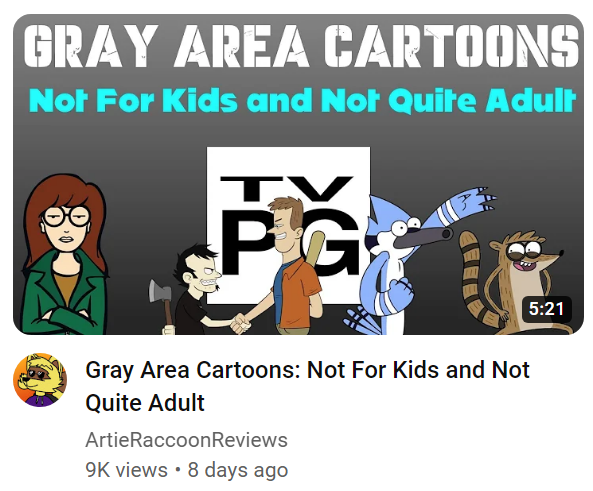
I believe the rapid rise and infamy comes from how young adult focused most of Glitch’s shows are. Because aside from the occasional Daria or Beavis & Butthead, American cartoons don’t really aim specifically at the teenage demographic for the most part. It’s gotten to such extremes where I’ve seen cartoon fans not know how to describe the age between kids and adults, instead calling it a “gray area”. And it’s something I never got. Novels, music, video games, movies, and anime figured out how to pander to the teen/YA market, but western animation as a medium stagnated there? Especially now that even shows aimed at primarily at pre-teens are near-extinct so the gap is bigger than ever. Which is why I think Glitch cartoons became successful and why discussion around them is so rabid. They found the niche other animated series were failing to appeal to and grabbed hold, and now we’ve got teenagers at conventions dressing up like Pomni and Jax.
But the thing about the formative years are they’re the most unstable years, and teenagers (especially people who are still mentally teenagers) can be quite chaotic. Resulting in all these emotional lapses not just from the target demographic but from people who really should be old enough to know better. Think the thirty or fortysomethings who get really parasocial with e-celebs and pretend it’s normal but it’s unnerving everyone else, those guys. And while I’m in no position to meaningfully judge since I’m an immature jackass too, it’s all still a fascination. Because I don’t think many of us ever really escape those teenage years, no matter how distant they grow. And social media’s made it clearer than ever that emotional maturity is a rarity, especially when algorithms almost reward people for behaving like a loud enough manchild. Which TADC engages with, as it’s a show where the cast are trapped in a digital prison while forced to play childish games against their will, and often against their own identities. It’s a series capturing the cultural zeitgeist of being stuck in a cage and lashing out in frustration to the point of disassociating and separating our actual self from the self we think we are. In a similar way the show Severance became extremely popular around the same time as TADC, or works in other mediums like The Stanley Parable or Piranesi. For the modern day human, regular face-to-face life and digital avatar life are more intertwined than ever, in ways that have proven unhealthy and debilitating. Detachment and simulation become routine. Identities are in flux and the monomyth on how to grow and change as a human being becomes a fantasy as the resources to achieve such growth become harder to attain, so what else is there to do besides lash out and scream at those who don’t deserve to be screamed at?
And it’s through that chaos where these shows thrive. Gameoverse is about how defeating the villain can accidentally unravel your own world. Knights of Guineverse is where the figures promising you a “Happily Ever After” are lying through their teeth. I’ve seen too many animation critics lament the success of TADC and its contemporaries and wonder when some indie cartoonist will make a modern day Looney Tunes or Hanna-Barbera short instead, and while those are certainly doable, I don’t see how they can thrive when it’s clear viewers want more than just gag-a-minute shorts and anthropomorphic animal mascots quipping at the screen in an attempt to be the next Bugs Bunny. Which isn’t to say one genre is inherently better than the other, I enjoy my fair share of comedies as the next guy, but as Leo Tolstoy said, “Happy families are all alike; every unhappy family is unhappy in its own way”. Drama, even poorly-written drama, is just more exotic than even the best-written comedy can be, especially in a medium like western animation where the latter genre had a strangehold for decades. And maybe this is all speaking too soon, maybe Glitch will fuck up like Rooster Teeth and become another “what could have been” footnote in pop culture history, but for now, they’re succeeding because they’re depicting what it’s like to hang on in a hurricane.
If you thought those last few paragraphs were stupid, why not argue about it on the AR forum?